Extreme desert
Extreme desert

An extremely hot, dry area, devoid of almost all life. Searing heat and a near total lack of arable land make it very difficult to survive here.
Searing heat and a near total lack of arable land make survival here a challenge.
Base Stats
- Type
- Biome
- Texture on World Map

- Allows colonies
- Yes
- Allows Roads and Rivers
- Yes
- Animal Density
- 0.1
- Plant Density
- 0.002
- Disease MTB Days
- 90 days
- Movement Difficulty
- 1[Note]
- Forageability
- 0%
- Wild Plant Regrow Days
- 35 days
- Min Temperature
- 4.82 °C (40.7 °F)
- Max Temperature
- N/A
- Rainfall range
- 0mm – 340mm
- Swampiness range
- N/A

- Clear
- 18
- Rain
- 1
- Dry Thunderstorm
- 1
- Rainy Thunderstorm
- 1
- Soft snow
- 1.5
- Hard snow
- 1
- Gray Pall

- 1
- Sandstorm

- 2
- Max fish population
- 240
- Freshwater common
- Guppy
- uncommon
- Tilapia
- Saltwater common
- Bluefish
- uncommon
- Tuna
Extreme desert is a hot and dry biome in RimWorld.
Summary[edit]
The hot temperatures can cause problems for colonists and tamed animals. Its warm enough for growing plants outdoors, but it has to be done in stony patches around hills and mountains. Even though potatoes grow better in stony soil, you need to plant rice first so you will not starve while waiting for potatoes. Strawberries are also a good idea since there is no wood for cooking. Later hydroponics can be used instead of ground. This biome has patches of soft sand which prevent building, but can be removed with moisture pumps. Animal migrations may occur, about once every other year.
In the lists below the number in brackets represents the relative commonality.
Flora[edit]
 Agave (0.25)
 Grass (6)
 Saguaro cactus (1)
 Gray grass
 (5)
(5) Pebble cactus (1)
Fauna[edit]
 Donkey (0.2)
 Dromedary (0.2)
 Fennec fox (0.1)
 Guinea pig (0.002)
 Iguana (1.5)
 Vulture (1)
Additionally, these animals can spawn in coastal maps:
 Hermit crab (0.1)
If the map is polluted, then the game may choose to spawn in wild animals from this list instead:
- Iguana (1)
 Megascarab (1)
Diseases[edit]
Extreme Desert has a disease MTB of 90 days. The following diseases can occur in a Extreme Desert:
| Disease | Commonality |
|---|---|
| Flu | 100 |
| Plague | 80 |
| Gut worms | 40 |
| Muscle parasites | 40 |
| Fibrous mechanites | 30 |
| Sensory mechanites | 30 |
| Animal flu | 100 |
| Animal plague | 80 |
| Organ decay | 10 |
Fish[edit]
 |
This section relates to content added by Odyssey (DLC). Please note that it will not be present without the DLC enabled. |
The table below contains the list of all of the fish that can be caught - as well as where they can be caught.
| Fish | Water body | Rarity |
|---|---|---|
| Guppy | Freshwater | Common |
| Tilapia | Freshwater | Uncommon |
| Bluefish | Saltwater | Common |
| Tuna | Saltwater | Uncommon |
Analysis[edit]
The extreme desert is one of the harshest biomes in the game, although a standard extreme desert is not as difficult as the sea ice. There is arable land, natural stone, ores, and natural structures to take advantage of, making it easier to reach stability. The following difficulty analysis is for regular extreme deserts:
- Food and Growing: Difficult - Food can be an issue when starting out due to the lack of animals and poor soil. However, arable land exists, and growing can be done year-round (with normal temperature settings). Once the first batch of crops finishes growing, a small colony's worth of food can be sustained.
- Disease: Easy-Moderate - Disease events are uncommon, although no wild healroot grows there, and growing space is limited for regular healroot.
- Temperature: Difficult (regular settings) to Extreme (hot world temperature) - Extreme desert is not nearly as hot as the sea ice is cold. Average summer temperatures are typically below 36 °C (96.8 °F), the normal heatstroke threshold, although heatstroke can still occur during the daytime and from heat waves. The near total lack of wood makes building an emergency passive cooler harder. Once electric coolers and/or dusters are established, temperature should no longer be an issue. If the global temperature is increased in the world-generation settings, extreme deserts can become hot enough to prevent crops from growing.
- Fires: Easy - There is basically no plant life, so flashstorms are not a concern unless lightning hits your colony directly, and wildfires essentially don't exist. Rain is rare, so if a manhunting boomalope or a raider lights your flammable base on fire, it is unlikely that rain will naturally happen.
- Predators: Easy - The only natural predator is the fennec fox, which is half the size of an adult human and has equal speed to a base human.
Extreme desert is overall a difficult biome. While it is not difficult to reach stability, the extreme desert remains unforgiving if/when something goes wrong, especially during the early game. Once a sufficient hydroponics farm can be established, the average difficulty is similar to other biomes, and arguably easier due to the reduced diseases.
Dune survival[edit]
In the dunes, there is no soil and no ores to mine. Food is limited to hunting the few animals around, trading, and cannibalism. Cannibalism is the main reliable food source in the early game. Raids happen at the usual rate, and with a colonist count of 1, the storyteller's population intent will kick in to provide more food via potential recruits. Fishing is possible if a dunes tile generates on a coast.
Gallery[edit]
An Extreme Desert

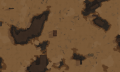
Extreme desert's texture on the world map
Version history[edit]
- 0.13.1135 - Added
- Temperate
- Temperate forest • Temperate swamp • Scarlands
- Hot
- Tropical rainforest • Tropical swamp • Arid shrubland • Desert • Extreme desert • Glowforest • Grassland • Lava field
- Cold
- Boreal forest • Cold bog • Tundra • Ice sheet • Sea ice • Glacial plain • Orbit
- Water
- Lake • Ocean
- Pocket map
- Underground • Labyrinth • Metal hell • Undercave • Insect lair