Scarlands
 |
This article relates to content added by Odyssey (DLC). Please note that it will not be present without the DLC enabled. |
Scarlands

Ruins of an ancient city which was destroyed by weapons of mass destruction. Water here is toxic and scaria runs rampant among the animals. Mechanoids lurk among the shattered buildings, waiting to awaken and kill again.
Base Stats
- Type
- Biome
- Texture on World Map

- Allows colonies
- Yes
- Allows Roads and Rivers
- Yes
- Animal Density
- 1.0
- Plant Density
- 0.4
- Disease MTB Days
- 50 days
- Movement Difficulty
- 1[Note]
- Forageability
- 100%
- Wild Plant Regrow Days
- 20 days
- Min Temperature
- -10 °C (14 °F)
- Max Temperature
- N/A
- Rainfall range
- 600mm – 65535mm
- Swampiness range
- N/A

- Clear
- 12
- Fog
- 1
- Rain
- 2
- Foggy rain
- 2
- Dry Thunderstorm
- 1
- Rainy Thunderstorm
- 1
- Soft snow
- 2
- Hard snow
- 2
- Gray Pall

- 1
- Tox rain

- 1
- Overcast
- 6
- Max fish population
- 0
- Freshwater common
- uncommon
- Saltwater common
- uncommon
Scarlands is a temperate biome in RimWorld added by the Odyssey DLC.
Summary[edit]
 |
This section is a stub. You can help RimWorld Wiki by expanding it. Reason: Pollution integration with Biotech? Address evem if no existent. Also link to toxic water. |
Scarlands biomes have multiple unique traits compared to other biomes. All water bodies in Scarlands are toxic, and tox rain can occur, which will cause toxic buildup to exposed pawns. Though they share properties such as temperature, growing season, and rainfall with other temperate biomes, scarlands have a significantly lower amount of wild plants and animals, the latter of which have a 50% chance to spawn with scaria. Additionally, soil is scarce and rich soil does not spawn[Verify], which when combined with the lack of food sources makes this biome a challenge to settle in.
Players entering Scarlands will be greeted by a large complex of ancient ruins. Most buildings are empty, though some contain treasures, traps, or dormant mechanoids.
In the lists below the number in brackets represents the relative commonality.
Flora[edit]
 Berry bush (0.02)
 Brambles (1)
 Bush (0.6)
 Dandelions (0.5)
 Gray grass
 (2)
(2) Ripthorn (0.8)
 Witchwood tree (0.5)
 Snagroot tree (0.4)
 Thornvine (8)
 Yellow grass (2)
Fauna[edit]


Additionally, these animals can spawn in coastal maps:
None.
If the map is polluted, then the game may choose to spawn in wild animals from this list instead:


Diseases[edit]
Scarlands has a disease MTB of 50 days. The following diseases can occur in a scarlands:
| Disease | Commonality |
|---|---|
| Flu | 100 |
| Plague | 100 |
| Malaria | 100 |
| Gut worms | 50 |
| Fibrous mechanites | 30 |
| Sensory mechanites | 30 |
| Muscle parasites | 50 |
| Animal flu | 100 |
| Animal plague | 100 |
| Organ decay | 10 |
Fish[edit]
Water bodies spawned inside of scarlands do not contain fish.
Analysis[edit]
|
This section is a stub. You can help RimWorld Wiki by expanding it. Reason: More detail, strategies, and general cleanup needed. |
The Scarlands present a unique risk/reward dilemma.
The risk is the hostile enviorment. Much of the arable soil is replaced with tile, there are no naturally grown trees or edible plants, and the few animals that exist are often infected with scaria. Additionally, while the buildings can provide shelter and resources, they also can contain deadly mechanoids and hunter traps that can easily kill or cripple unprepared colonists. If the Biotech DLC is active, pollution will be present in the Scarlands. This pollution causes acidic smog every ~200 days, inflicts the toxic buildup debuff on unmasked colonists, slows plant growth, and taints the water.
The reward is what you can scavenge. The buildings can be used for free shelter to settle into from day one, and contain valuables like components, steel, and chemfuel scattered throughout. The Scarlands also offer an interesting shift from typical gameplay. Instead of building a base from scratch, the base becomes a "fixer-upper" project, which can be novel and rewarding for some players.
In terms of strategy, a player’s biggest concern in the early game is food. Due to the low-fertility soil, potatoes (or toxipotatoes, depending on the level of pollution) are a player’s best crop, as they grow independently from soil fertility. Players will have to rely on trade, raiding, or cannibalism while waiting for crops to grow. Maddened animals will hunt pawns often, so have good quality weapons, armor, and well-placed traps as soon as possible. Furthermore, ranged weapons are recommended over melee for the distance between pawns and scaria-infected animals in combat.
Overall, the Scarlands offer unique challenges and rewards compared to other biomes; however, survival can prove overwhelming for new or learning players.
Gallery[edit]

A scarlands

A polluted scarlands
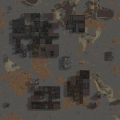
A fully generated scarlands

Scarlands's texture on the world map


Version history[edit]
- Odyssey DLC Release - Added.
- Temperate
- Temperate forest • Temperate swamp • Scarlands
- Hot
- Tropical rainforest • Tropical swamp • Arid shrubland • Desert • Extreme desert • Glowforest • Grassland • Lava field
- Cold
- Boreal forest • Cold bog • Tundra • Ice sheet • Sea ice • Glacial plain • Orbit
- Water
- Lake • Ocean
- Pocket map
- Underground • Labyrinth • Metal hell • Undercave • Insect lair